
BFA IN DANCE · DOCTOR OF PHYSICAL THERAPY · FORMER PROFESSIONAL DANCER
Or why your développé matters. Or why getting en pointe is still worth it even when your feet swell after rehearsal.
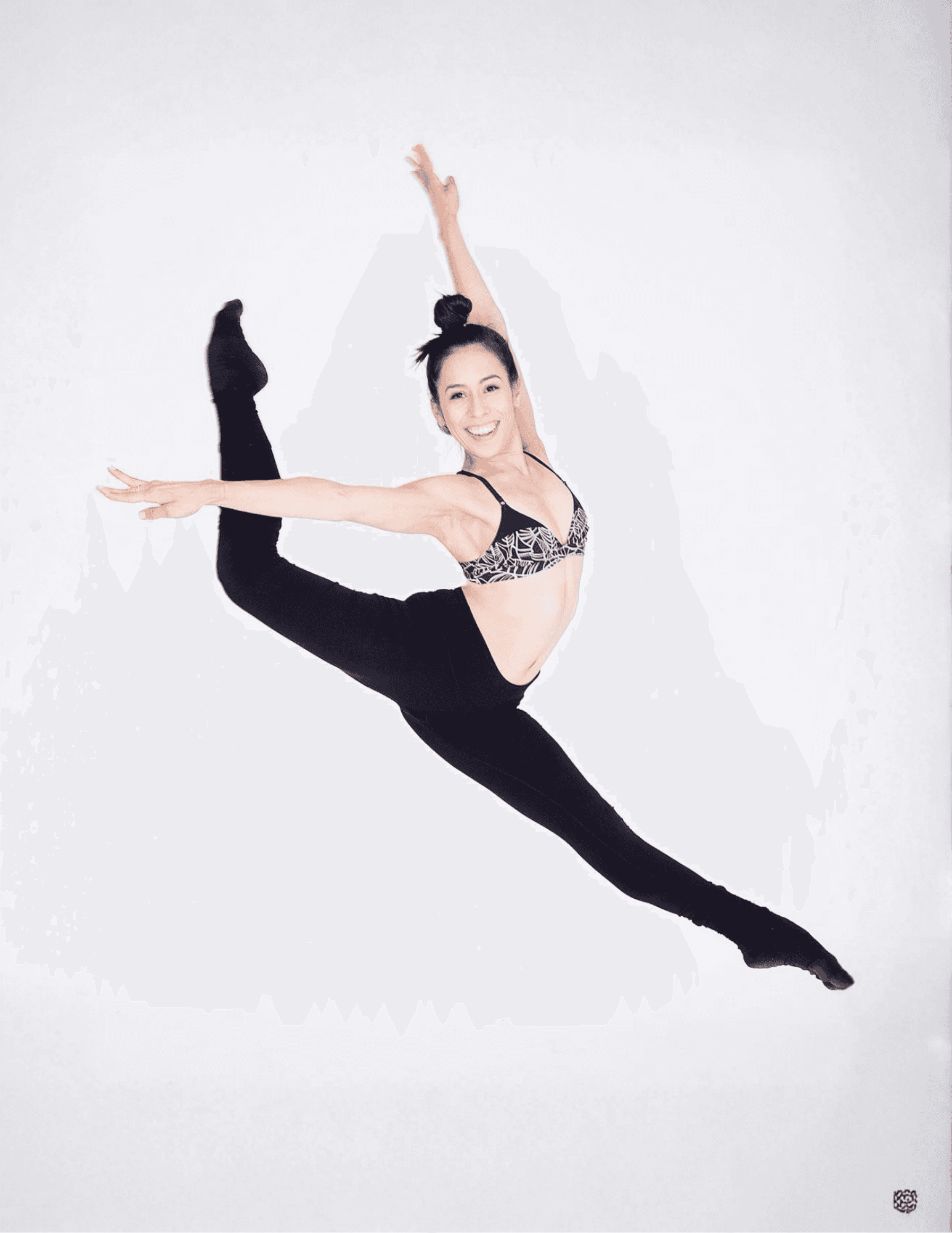


I’ve been on both sides of the barre. Now I get to combine my background in professional dance with movement science to help dancers understand their bodies, train smarter, and keep doing what they love.
02
I learned my BFA in Dance, spent years training and performing, and eventually traded some of my rehearsal hours for anatomy textbooks.
Now, as a Doctor of Physical Therapy, I get to connect two worlds that don’t always speak the same language.
I understand the artistic demands of dance, but I also understand the biomechanics, strength, coordination, and tissue capacity required to support them.
And as a hypermobile dancer myself, I know firsthand that having the range and knowing what to do with it are two very different things.
04
TAP A CARD TO FLIP IT
01
FLIP ->
AT THE BARRE
You can hold your leg in a penché.
02
FLIP ->
WITH A THERABAND
You can point your foot with a theraband.
03
FLIP ->
THE CORRECTION
You’ve spent years hearing “pull up from your knees.”
Dancers are some of the smartest movers I work with, which is exactly why you can find a way to look incredibly strong while still feeling unstable, disconnected, or exhausted underneath the surface.
Looking stable and actually feeling supported are not always the same thing.
You’ll still dance like you. We’re building the support your body needs for the level you’re already performing at.
05
Dancers are really good at pushing through.
But being able to finish class doesn’t tell us whether you’re dancing comfortably, compensating, or spending the next day recovering.
A dance-specific body check-in to help you recognize changes in movement, symptoms, and training tolerance, and understand when it’s time to get assessed.
06
LET’S TALK FEET
COMING SOON TO YOUTUBE

Spoiler: Genetics plays a role in the shape of your feet.
But strength, mobility, coordination, and how you use the rest of your leg are all trainable.
THE DANCE TEACHER’S PLAYBOOK
You’ve probably seen this happen in real time: the dancer who keeps stretching because something feels “tight,” the student who can force the shape but can’t control it once they get there, or the correction that makes technical sense but somehow creates more gripping.
Dance teachers are constantly asked to solve movement problems without always being given the anatomical tools to explain what’s happening underneath them.
Bridging the space between the cue and what’s actually happening in the body.
Sometimes “lift,” “spiral,” or “don’t grip” makes perfect artistic sense and still doesn’t fully translate physically.
07
Dance medicine means understanding the unique demands of performing artists, injured or not, and connecting them with evidence-informed care.
My clinical interests include dance medicine, hypermobility, orthopedic rehabilitation, and pelvic health.
AFFILIATIONS
International Association for Dance Medicine & Science (IADMS)
Doctors For Dancers
The Ehlers-Danlos Society
08
Dance-specific physical therapy, without having to explain why your technique matters.
Whether you’re navigating an injury, returning to dance, or trying to understand why a movement looks beautiful but feels terrible, we’ll look beyond whether you can perform it. We’ll look at how it feels, what your body is doing to accomplish it, and what you need to keep progressing.
WHAT WE’LL LOOK AT:
Your dance background, training schedule, and goals
Injury history and current symptoms
Strength, mobility, and movement control
Dance-specific technique and physical demands
What feels difficult, not just what looks difficult
BOOK WITH ME ->
